.jpg)
The overcast skies and cool temperatures must have dissuaded other hikers, as we had the parking area entirely to ourselves - probably a first among all the times we have visited Muker. It didn't take me long to begin snapping photos; in the center of the village, these stunning rock gardens are vibrant even in late April.

Of course, April is prime time to see new lambs. You might see a few more throughout this post! Don't you like the Goth make-up on this one?


The parish of Muker has hundreds of small field barns, or cowhouses, as they are known here. They formed part of a unique style of farming which probably started in the seventeenth century and continued on into living memory. Milk from cows provided an important income to farmers, especially when it was turned into cheese and butter. Winters in upper Swaledale are harsh, so cattle were brought in around November and tied up inside these little cowhouses.
They were fed from hay stored next to them, cut from the surrounding fields. In the spring, the cows were let out to graze on the hillside pastures, and the muck from the cowhouses was spread onto the meadows to help grow the new season's hay.


The footpaths in this area are easy to see - many feet have passed this way before us. Nevertheless, we carry a map and look for footpath signs along the route. Yellow arrows are the most common markings, but it is also typical to see wooden signs such as the one below.
.jpg)

I never tire of the magnificent landscapes that roll out before me, an unfathomable expanse of green turf, punctuated by ancient dry-stone walls.


We don't often experience house envy, but the outlook (in all directions) of this stone house had us drooling and imagining afternoon tea while taking in the vistas.


I can imagine, in the summer, that this might be a refreshing pool for a dip, or for young ones to gather stones and build small dams and other creations sprung from the depths of their imaginations.


Near this point, we took a path to the left of the main trail; this was new territory for us, and boy, am I glad we took the "path less traveled". We discovered some intimidating rock formations (is this going to fall on me as I walk past?) and several photogenic waterfalls!
.jpg)

With Spousal Unit to give you a sense of scale. (Can you even see him to the left of the waterfall?)


The only fertilizer used on these fields is still just the muck produced by cattle overwintered in the nearby cowhouses. This is one of the last places in the dale that you will see the cattle kept in these traditional stone cowhouses, although they are no longer tied in the stalls.

As we came back into Muker, the lambs scampered all around us. How adorable! An unscientific observation would suggest that most ewes have one lamb; triplets are unusual. Love this video of a three-some gamboling with no sign of Mom anywhere!
The trail is so popular that flagstones were added to encourage people to stay on the path and not trample the meadows used for hay. I stepped off the path to avoid disturbing Mama and the twins.


The final two miles of our return to Muker parallel the River Swale, a river that rises on the slopes of High Seat and Nine Standards Rigg near Keld. The Swale takes it name from an old English word meaning "tumultuous river." Its upper reaches flow through the Pennine uplands in a deep trough-like valley known as Swaledale. The heavily wooded dale is renowned for its scenic beauty and attracts many summer visitors.
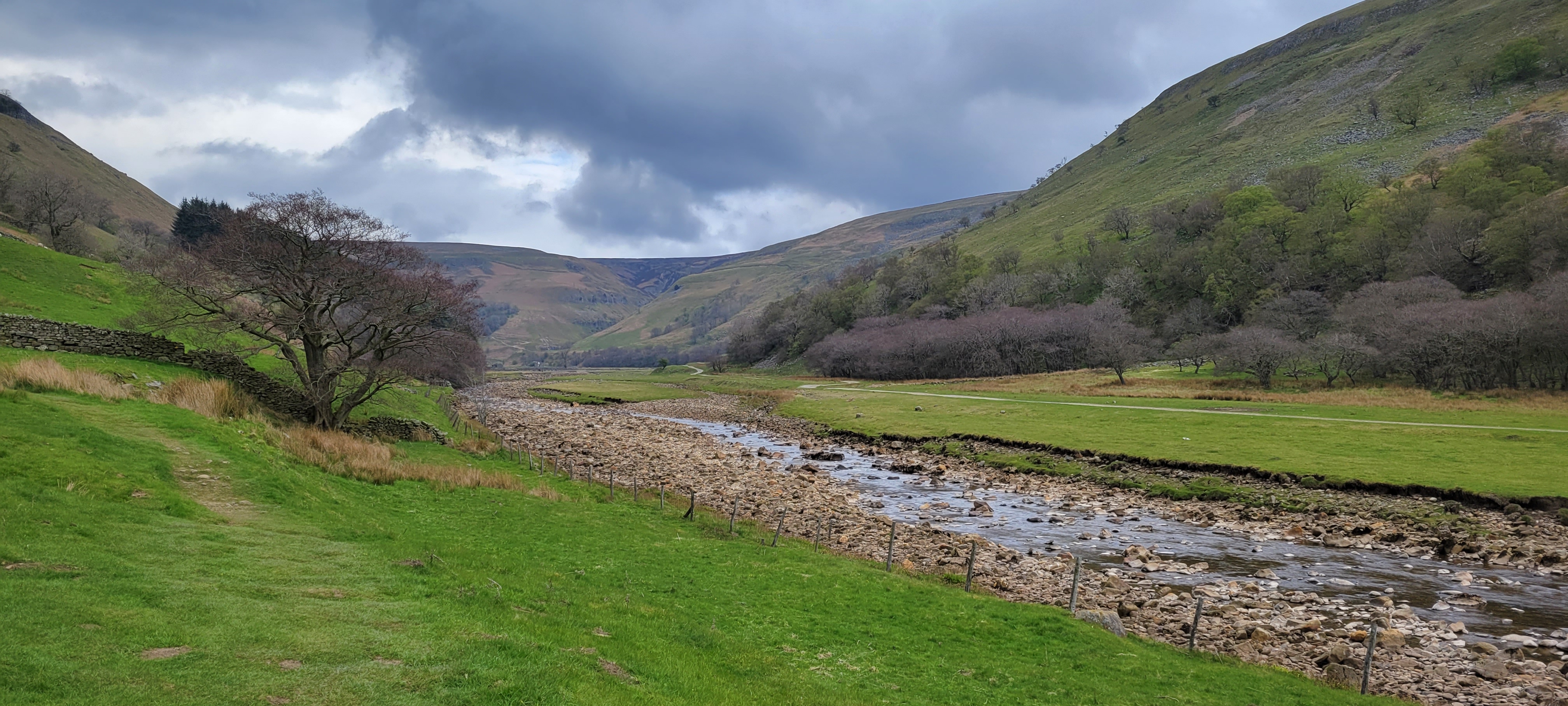
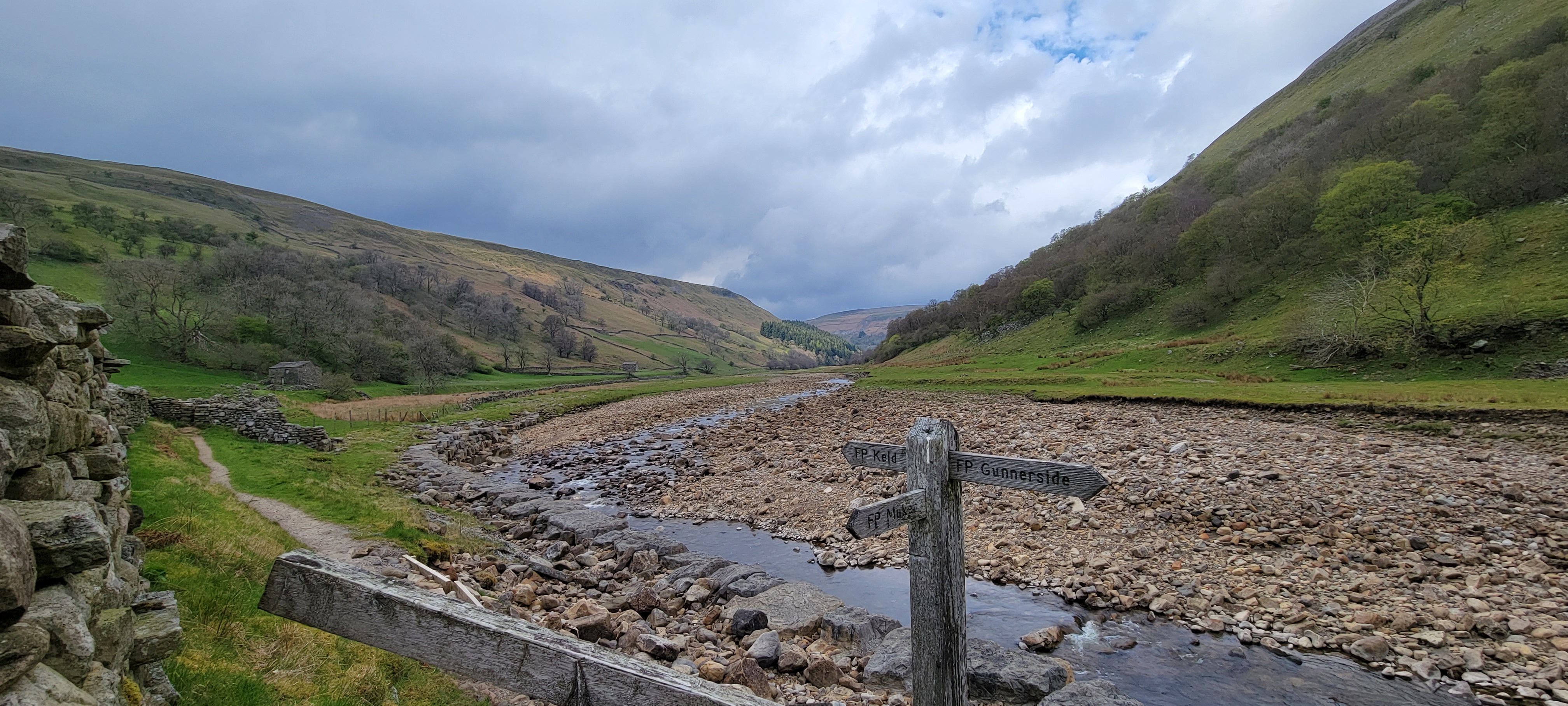
Oh, Muker and Swaledale, how I love you!
Linking to Saturday's Critters


